Here We Go Again?

IT. BEGINS. And it doesn’t end until they are back in therapy.” 

I’m looking in through the window of Finn’s car, and my heart sinks. I see dozens of used disinfecting wipes all over the seats, floors, and dashboard. I’ve seen them using the wipes here and there in the house and told Finn they weren’t for use on their skin, as they stand there wiping their hands, arms, and legs with them but seeing this many in their car… it hits home, hard. They’d been doing well for several years now. They’d come so far from the days of sobbing meltdowns on the bathroom floor, even dry heaving over the toilet when the looping intrusive thoughts of OCD would scare them so badly. Far, far from the days of cracked hands with raw fissures that stung like fire when I tried to apply lotion to them. Ever since they started working at the Pet, Vetting, and Boarding Center, the OCD has crawled out of its hole, not unlike that scene from The Ring when that scary girl crawls from the well.

At the Pet Center, it’s Finn’s job to take the dogs out and clean their kennels. Yes, that might start a germ frenzy in general, BUT the heartworm dogs must be kept separate from the general dogs, just like the dogs that occasionally get something like giardia. So, if you are a person who is prone to OCD, you say to yourself, “Well, they didn’t tell me to bring different shoes when I take the heartworm dog in and out but what if some of his germs stick to my shoes or pants and one of the well dogs brushes up against me, or what if I bring worms or giardia home to my own animals?” AND “I washed my hands at work then drove home, but I’m not sure if I washed my hands thoroughly enough last Tuesday, and I’m touching the same steering wheel, therefore my hands are contaminated, aren’t they?” I’m going to be responsible for a dog dying. Oh, God! Not to mention going back multiple times after getting halfway home to check the doors of the facility just one more time to make sure they are truly locked.

IT. BEGINS. And it doesn’t end until they are back in therapy. 

One could look at this as a defeat. They were doing so well. They’d wrestled their life back from the tight, unrelenting jaws of OCD. They’d even studied abroad in Japan for four months. However, I see this whole thing in a different light. LIGHT always being the key word. “Better out than in,” as Shrek would say, and what we drag into the light can now be dealt with. It represents something we had not yet faced. What it is, no matter how tormenting it may seem, is an opportunity for growth. We are better down the line for what we face today.

Finn called and made the appointment with their therapist and already seems to be doing better. They are strong enough to know when they need help and smart enough to know this is not a weakness. This is what courage looks like, facing our issues.

I am once again and always proud that they are mine.

I may not know you, but if you are courageous enough to seek help for yourself, I’m proud of you, too. Stay in the fight. You’re worth it.

OCD Awareness Week and “The Giggler”

It’s hard to admit something we thought was correct, a belief we held for years, is wrong. Or worse, that we might have been making light of something that was horrifically painful to someone else.

All we can do is educate, love, and have a little compassion for ‘The Giggler.‘”

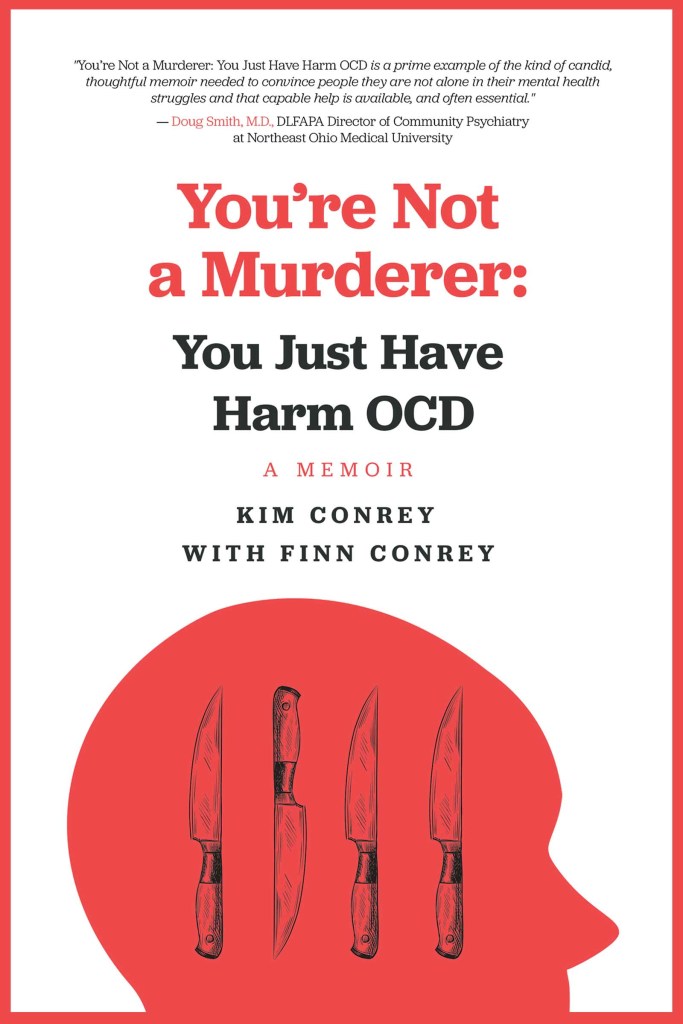
So often when I’m at a bookstore talking to readers about the memoir I wrote with my oldest child about living with clinical OCD and intrusive thoughts, You’re Not a Murderer: You Just Have Harm OCD, I’m met with “The Giggler.” Who or what is The Giggler you might ask. The Giggler is the person who hears the term OCD and immediately starts to giggle or smile. This is usually a very clear indication that they don’t know what it truly is. People who have experienced actual, tormenting OCD, the kind that has had them in tears, despair, and therapy, won’t be giggling.

I don’t necessarily blame these people, even though I’ve sat on a cold bathroom floor and rocked my sobbing child who was hanging on by a thread as her hands bled and intrusive thoughts and compulsions robbed her of her childhood, and, I feared, would take her life. The reason I don’t necessarily blame them is that we live in a society that has spread this misinformation so thoroughly and imbedded it so deeply into its fabric that those of us who actually, truly know what OCD is, have to weed out this misinformation with surgical precision. People won’t let go of it easily either. It seems that some folks, no matter how kindly I explain it, will even argue that their tendency toward neatness is indeed OCD.

“Does the organizing torment you/your daughter/spouse?”

“No! They love it! It just drives the rest of us crazy! Ha! ha! Ha!”

“Well, it likely isn’t OCD then. Organizing these things wouldn’t make them feel better. It would likely make it worse and never be enough. They’d need to do it again and again with increasing anxiety.”

“No! No, I know they have OCD. Ha! Ha! Ha! Everything is color coded, and she doesn’t want anyone to mess with it.”

They start to get annoyed with me, and I get that too. After all, no one wants to be told that something they have believed for a long time, something they thought was more a cute quirk, is not. When all is said and done, all we can do is plant the seed. Offer correct information about what OCD is truly like and hope that despite the giggling, the stubborn desire to believe the social media, white washed, cute meme version of OCD, that the seed we planted will bloom later. Just because they left the bookstore stubborn doesn’t mean they stayed that way. It’s hard to admit something we thought was correct, a belief we held for years, is wrong. Or worse, that we might have been making light of something that was horrifically painful to someone else.

All we can do is educate, love, and have a little compassion for “The Giggler.”

Book Recommendations for Mental Health May

“You are not alone” is often something I say, or write, when discussing mental health struggles, but it also makes me laugh because it sounds a bit ominous, too, like maybe I should turn around and look behind me. I think that’s also the look I often get (ominous) when trying to explain Harm OCD to people who’ve never heard of it before. Somewhere in their head they must be thinking, Wait, someone can have intrusive thoughts that they feel they can’t stop–sometimes even very violent thoughts that scare them–and not be violent themselves?

“Yep! Absolutely, and it’s so much more common than you think!” The same mechanism that causes a person to check the same door lock repeatedly or wash their hands until they bleed can cause a thought to loop until the person is in tears. I tell people this at book signings all the time. Intrusive thoughts are actually quite common among true OCD sufferers–not the clichéd stereotyped version of OCD we hear about all too often. We need to be able to talk about our mental health struggles so no one has to suffer in isolation, thinking they are the only ones dealing with these things. Let’s check in with each other, listen longer, and be a little slower to judge. Most of us are going through something we aren’t talking about.

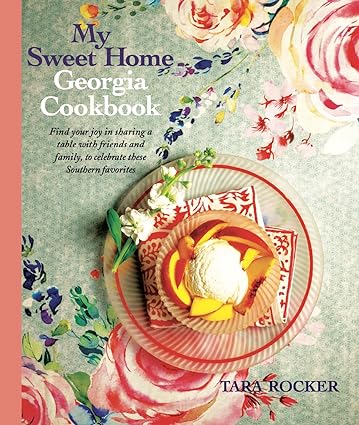
In fact, this month I’m happy to introduce you to some different books from authors who’ve expressed their struggles and how they dealt with them in creative ways. My friend Tara Rocker talks candidly about her challenges with depression in her book My Sweet Home Georgia Cookbook. You can cook up some amazing recipes and gain courage from her honesty about what her path forward looked like. To learn more head to taradeloachrocker.com

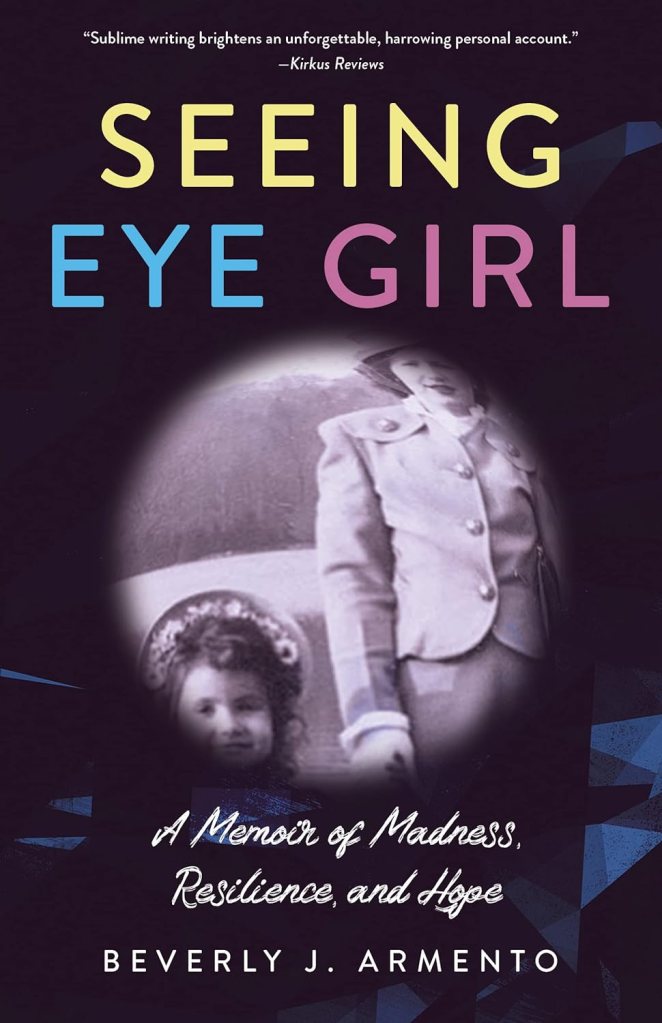
Beverly Armento has written a multi-award winning memoir titled Seeing Eye Girl. As the “Seeing Eye Girl” for her blind, artistic, and mentally ill mother, Beverly Armento was intimately connected with and responsible for her, even though her mother physically and emotionally abused her. She was Strong Beverly at school—excellent in academics and mentored by caring teachers—but at home she was Weak Beverly, cowed by her mother’s rage and delusions. To learn more head to beverlyarmentoauthor.com

If you’re looking for fiction books having to do with mental health, Tara Allred offers just that with Sander’s Starfish. Dr. John Sanders is about to begin his career as a clinical psychologist. Full of optimism, he believes he can make a difference and is eager to provide hope to a group the world has deemed hopeless. Yet in John’s quest to offer those in his care a second chance, he embarks on his own journey of self-discovery. In his search, clear answers become scrambled confusion while the unimaginable truth is trapped in a complex web. To learn more head to taracallred.net

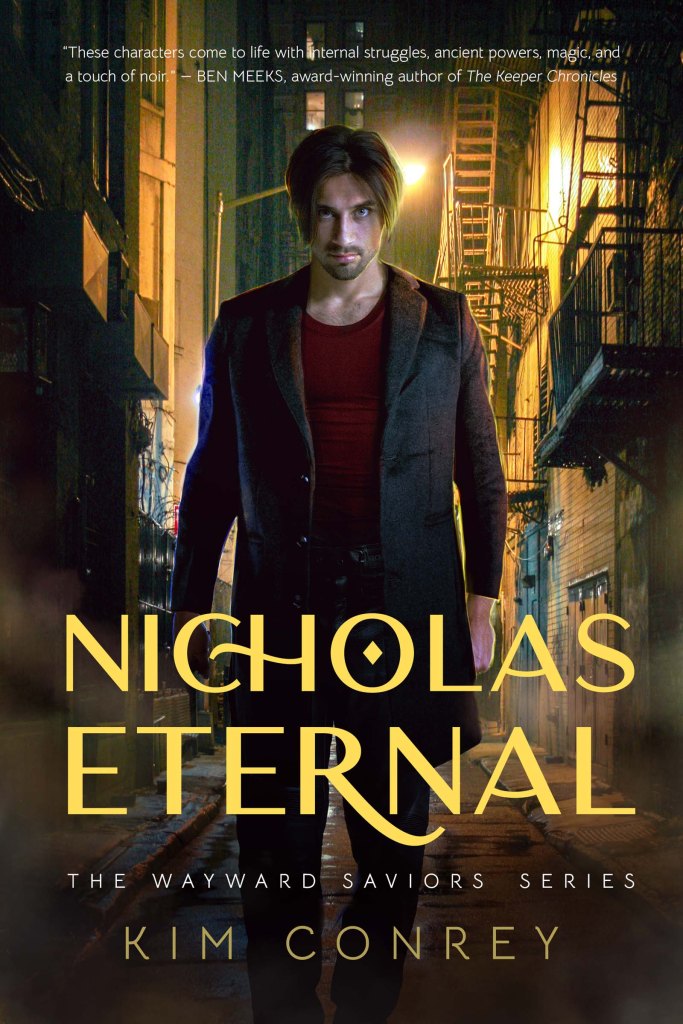
And finally, Nicholas, in my urban fantasy Nicholas Eternal is struggling with his mental health when the story opens. He is in as much need of saving as the children he has been tasked for an eternity with saving. I’d always wanted to write a hero who was so absolutely human and relatable that the more we peeled back the layers, the less you saw a powerful immortal and the more you saw a simple man, as scared and flawed as we all are, perhaps more so because so much more is expected of him. Too much really, but doesn’t it feel that way for must of us, much of the time?

To learn more about Kim’s fiction head to Kimconrey.com

Be well and hang in there, my friends. People you haven’t even met yet care about you and want you to succeed.

Here are some great resources if you or someone you know is in need of help:

NAMI National Alliance on Mental Illness

​988 Suicide and Crisis Lifeline ​

​IOCDF International Obsessive Compulsive Foundation

The Things I’ve Heard

“People just don’t understand.

No, they don’t, but I’m here. I do. And I’ll keep showing up.”

Since I’ve been out at bookstores doing signings with the OCD memoir that I co-authored with my adult child, You’re Not a Murderer: You Just Have Harm OCD, I feel like I’ve just about heard it all. Yes, there’s certainly the typical response, “Oh, look honey,” the wife says as she turns to the husband while pointing at my book, “a book about OCD. I should get that. You know how mad I get when you disorganize my alphabetized spice rack.” They share a chuckle. Oh, yes. I sold the book to her without correcting her. No need. When she reads it, she will understand what OCD truly is. Inevitable cringing will follow, and the chuckle will vanish. One day, they might even educate someone else about what OCD really is.

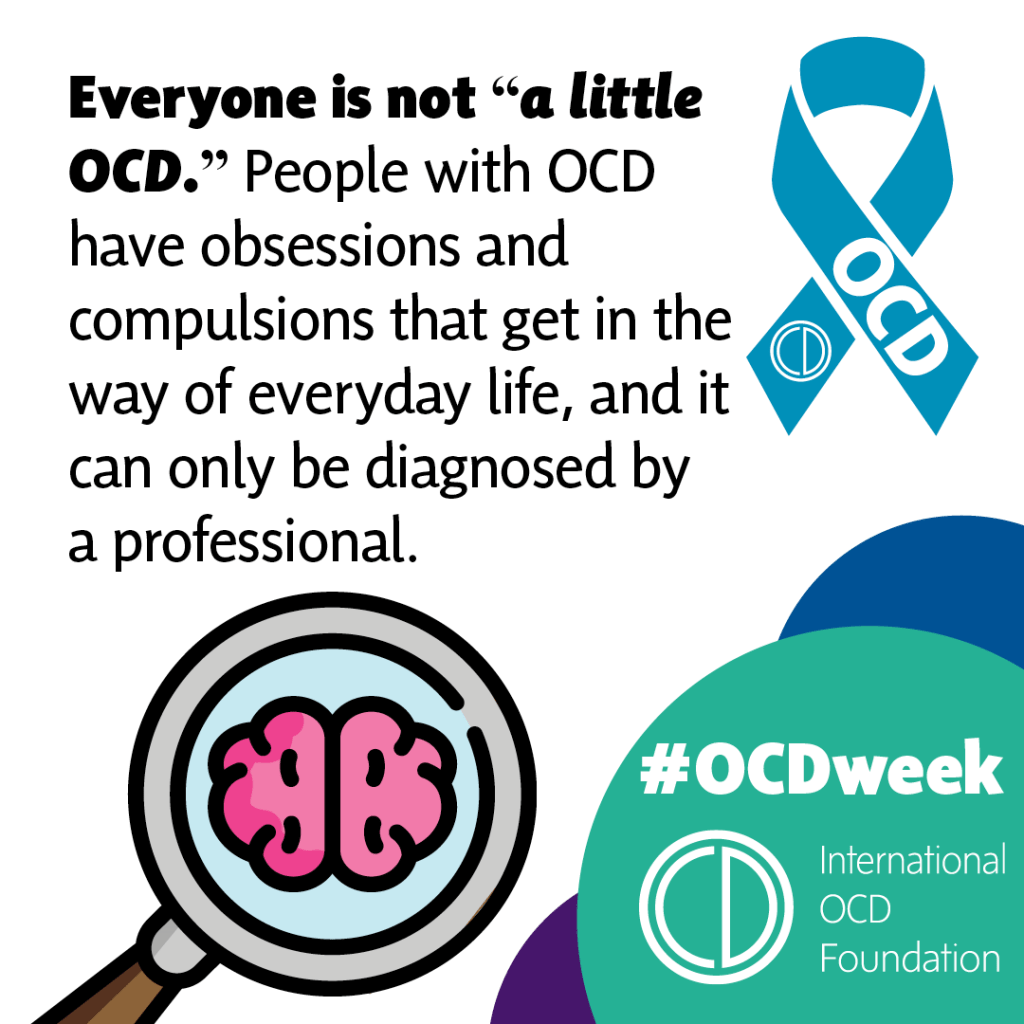
I don’t think people misuse the term on purpose. It’s just really hard to change a harmful perception that has burrowed so firmly into the public collective. And why does it matter if people get it wrong? Well, when my teenager with severe OCD came home from high school health class years ago and told me they didn’t need therapy because their teacher told them OCD was a “neatness” disorder and they weren’t neat, it mattered a lot! They were tormented by compulsions but that one misunderstanding from someone they trusted, had them utterly confused and delaying therapy.

Then there’s the person who says, “Yes, I have that!” They go on to describe the bins their knickknacks have been arranged into, smiling the whole time. When I say how tormenting OCD was for me and my child, they seem confused. They’re confused because we are NOT experiencing the same thing. That’s the problem with a society that thinks it’s okay to joke about a mental illness and make sweatshirts that say, “I’m OCD for Christmas!” and other such nonsense. When I get a stomachache, I don’t suddenly claim to understand what it is like to have cancer. It isn’t the same thing, people. Yes, there are different degrees or expressions of OCD, but in general, if you can organize your stuff, walk away, and feel relieved, then you probably don’t have OCD. If you organize it, then do it another ten times with tears running down your face because it will never be enough, well, there might be something there.

Another of my other least-favorite comments is, “Aren’t we all a little OCD?” One guy flippantly said this as he looked at the cover of my book, dismissing my struggle without so much as cracking the spine of the memoir. Well, no we aren’t. We can all get a little fixated when we have a desired outcome in mind or get really interested in a project, but no, we do not all have clinical obsessive compulsive disorder. One study identified four genes in people with OCD that neurotypical people do not have. Also, the brain of a person with OCD looks different on a scan. Not only does it show up hotter in the affected regions, but it is literally thicker in some areas and thinner in others. The exception to all this seems to be Pediatric Autoimmune Neuropsychiatric Disorder Associated with Streptococcal infections (PANDAS), which is a form of OCD activated by a strong virus.

Here’s an excellent article explaining OCD and Harm OCD and the mechanisms that switch them on: https://www.newportinstitute.com/resources/mental-health/harm-ocd-hurting-others

For now, what can I do? I can keep heading out into the world with this message. Sure, it’s annoying to be met with the stereotypes. It’s also beautiful from time to time, like when someone walks up to me and says, “Thank you for writing this book,” because they believe it will help their son/daughter, brother/sister, etc. There are also those moments of connection when someone who actually does have true, clinical OCD looks at me with haunted eyes and says, “I’m so glad you’re writing about this. People just don’t understand.”

No, they don’t, but I’m here. I do. And I’ll keep showing up.

Finding the Joy

“…this is joy even if the subject matter is not so joyous. We are here to connect, to feel, to bear witness.”

It’s been a very busy year. Nicholas Eternal, a book I wrote back in 2015, was finally published this past summer. The next book in the Ares series, Losing Ares, came out in October, and the memoir that I wrote with my adult child, Finn, You’re Not a Murderer: You Just Have Harm OCD, about living with obsessive compulsive disorder and intrusive thoughts, was published in November. Stealing Ares, the first book in the Ares series, won Georgia Author of the Year in the romance category. That was a proud moment, to be sure.

You’d think that would mean this year was just one big celebration. Instead, it was just a lot of worrying about marketing. Am I doing enough and in the right places? I can’t help but ask myself, are these things making me happy? Then again, as my cussing nun in Stealing Ares tells Harlow Hanson when she asks her if she’s happy, “Happy is subject to shifting moods, fleeting. I’m… joyous.” So, here we are, with the much better question, “Am I joyous?”

Maybe some of you can relate. I have a driven personality. If you combine that with growing up in an atmosphere where nothing was done for you, and even help was rare, you never really gain a sense of security. You come to understand that if you are to achieve something, anything, you must work for it. Relentlessly. No one is going to swoop in and do it for you. This may sound good. Right? Discipline. Dedication. However, like most things in life, without moderation…off the rails we go.

As I sift through the book launches and marketing plans searching for the joy, a memory surfaces of my daughter at 5 years old running her hand down the wood grain on the side of the house. The world seemed to slow for her, came into focus, and she was just there, noticing that there was texture and pattern in a single plank of wood. She was in that moment doing nothing else, then she looked up at me and smiled.

At the Women’s Wellness Conference in October where I debuted my memoir, You’re Not a Murderer: You Just Have Harm OCD, I experienced a profound connection as a woman walked up to me, picked up my book, and said softly, “I think this is what is wrong with my son.” All the chatter in the lobby faded into the background. I looked into her eyes and saw the pain of a mother who’d been searching for answers and feeling inadequate. I know this pain well. This was the first of many such encounters. They happen nearly any time I’m out in public selling this book. I am not worried about marketing when these moments occur. I’m not thinking about Amazon rankings, reviews, ratings, or any other thing that will never really bring me true joy, I’m in the moment making a connection with another soul. For me, this is the very definition of soul: transcendent, powerful yet quiet, present—this is joy even if the subject matter is not so joyous. We are here to connect, to feel, to bear witness.

I guess I do experience joy, just not in the way I expected to, and I’m working on slowing down and celebrating now and then. I’ve come to understand I need work in this area, to say the least.

As the year winds down, I want to thank you for your support and wish you what is true, beautiful, and sacred. I wish you moments of connection. Pure and lasting joy. May you know them when you see them. May the world slow around you as you treasure them.